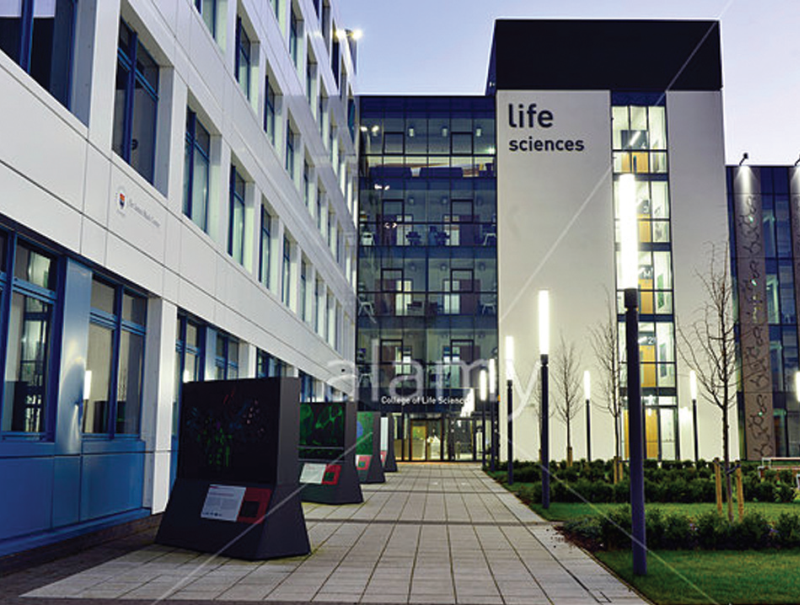
Lighting controls have been provided by CP Electronics for the new National School for
High Speed Rail, in Doncaster.
Input from CP Electronics during construction of the National College for High Speed Rail has supported a quality-assurance approach to lighting control, resulting in a smoother installation for contractors.
With the huge investment in infrastructure surrounding HS2, demand for skilled rail engineers will grow, so the National College for High Speed Rail in Doncaster will play an important part in meeting the needs of the UK rail sector.
Support from CP Electronics at each phase of the project ensured that it was executed correctly, first time round.
Overseeing the electrical installation was Briggs & Forrester Engineering Services Ltd. Having worked with them in the past, CP was asked to provide a lighting plan which met technical and cost objectives.
CP provided the lighting controls and helped evolve the lighting plan as requirements changed. The building has an atrium and is divided into office space, lecture rooms and workshops across three storeys.
CP was tasked with meeting the lighting control requirements for learning spaces. CP’s Vitesse Plus standalone lighting control system and An10 wireless presence detectors were ideal for this type of building.
The BREEAM assessment method made energy efficiency a priority and CP’s Vitesse Plus provided graduated dimming throughout the offices and classrooms –minimising energy use and costs by making the most of natural light.
Integral to reducing installation time, and maximising energy savings is the use of An10 wireless presence detectors. Because the sensors are linked wirelessly, this reduced installation time.
CP also recommended ELV switch drops to eliminate the use of RCBOs. Not only was this more cost-effective, but the use of 12v cable eliminated the need for RCBOs on the lighting circuit, saving yet more time for the contractor. The lighting also had to be compatible with the intruder alarm system, allowing lights to be activated in the atrium when the alarm was triggered, and the choice of system made this a possibility.
Completed in August 2017, the building was operational in time for the beginning of the new academic year.