Luceco delivers a complete lighting and controls solution for Kidderminster’s Piano Building.
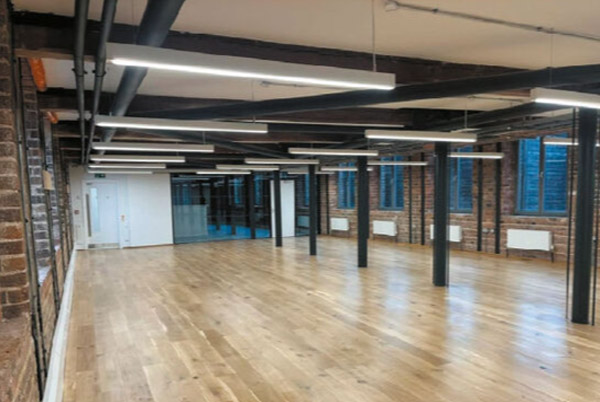
When West Midlands-based electrical contractors Barrie Beard were looking for a reliable lighting manufacturer for their latest project at Kidderminster’s impressive Piano Building, Luceco were able to provide a complete lighting and controls solution that met the brief. Part of the town’s wider regeneration programme, the Grade II-listed The Piano Building is being transformed and repurposed into a modern mixed-use facility including co-working and hybrid working spaces, entertainment space and restaurants.
From design through to hands-on support, Luceco worked closely with Barrie Beard to deliver a stress-free upgrade to a new, high-performance lighting and controls system for the building, ready for it to be occupied in Autumn 2025.
Luceco account manager, Jay Taylor commented: “It was great to work with Zach Beesley at Barrie Beard, and we are delighted to have been able to provide comprehensive support, that went beyond initial product supply – achieving both a scheme that would reflect and enhance the character of the building and also delivering a system that would maximise on energy savings with reliable performance.”
Prior to the project start, Luceco carried out a controls demonstration to explain the controls offering and potential savings the client could achieve. Luceco were then able to recommend a carefully selected range of high-performance luminaires to meet the various lighting requirements of the building.
This included Luceco’s Climate Extra IP66 linear luminaire, chosen for its durability and exceptional efficiency and ideal for areas needing reliable, low-maintenance lighting. Its Platinum Downlights provided a crisp, clean light in communal areas, complemented by Celeste backlit panels, selected for their uniform light distribution and contemporary finish.
Luceco’s Contour linear profiles, meanwhile, brought discreet yet effective lighting to transitional spaces. Presence and daylight sensors were integrated to allow the system to adapt automatically, reducing energy use in unoccupied areas and enhancing the building’s sustainability credentials.