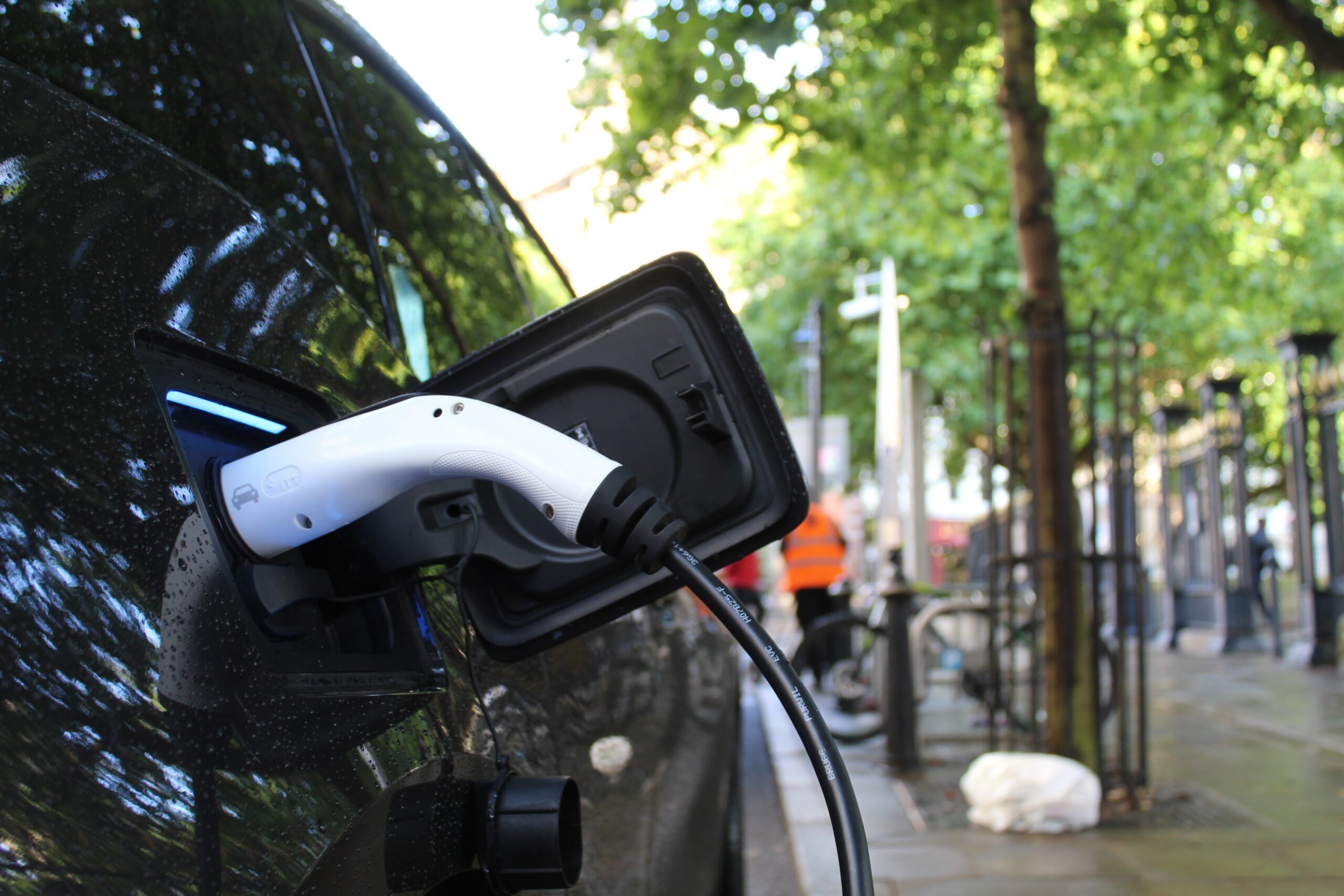
Mark Crook, managing director of one of the UK’s top-quality training providers Technique Learning Solutions, discusses the benefits of becoming a qualified Electric Vehicle Charging Equipment Installer, the different schemes and grants available, and how electricians can become qualified, OZEV approved installers.
Although the topic of electric vehicles (EV) has been around for a while, it’s only in the last few years that we have seen a big push within the UK. There were over 570,000 electric vehicles in the UK at the end of June 2021 – this was just under 9,000 a decade ago, meaning there has been an increase of approximately 6,233%.
Whilst this growth is great and set to continue, there are concerns that there aren’t enough electric vehicle charging (EVC) stations to meet this demand. The Competition and Market Authority (CMA) have suggested that the public charger network needs to grow at least ten times by 2030 – this would take the current amount of 25,000 public chargers to between 280,000 and 480,000 public charging stations.
The CMA has also expressed concern about the choice and availability of places for EVs to be charged at motorway service stations, and that the rollout of on-street charge points is too slow. They have also suggested that more charge points outside of London are needed, as these areas currently don’t have enough – this brings a risk of rural areas lacking them.
To try and meet the EVC demand, and ensure the growth continues, the government have pushed for electric vehicle infrastructure requirements to be added to the building regulations – proposed changes include:
● Every residential building with an associated parking space should have a chargepoint installed – this applies to buildings undergoing a material change of use to create a dwelling.
● Residential buildings with more than ten parking spaces undergoing major renovation should have cable routes for EVC points in each parking space.
● All new non-residential buildings should have one charge point for every one in five spaces. This also applies to building with more than ten parking spaces going under major renovations.
● Existing non-residential buildings with more than 20 car parking spaces would be required to have at least one charging point.
As well as these proposed building regulations, there are also a range of government schemes and funding out there to encourage and help homeowners, business owners and local authorities to install charging stations.
The Electric Vehicle Homecharge Scheme (EVHS)
This scheme is a grant which offers up to 75% of the cost when homeowners install an EV charging point at a domestic property within the UK. This funding is capped at £350 – you can claim up to this from the total costs of purchasing and installing a home charging point. To qualify, households must have purchased or leased an eligible EV in the past six months, have off-street parking, and must install a chargepoint that has been approved by the Office for Zero-Emission Vehicles (OZEV – previously known as the Office for Low Emission Vehicles.) Charge points must also be installed by an OZEV approved installer.
The Workplace Charging Scheme (WCS)
This voucher-based scheme provides support to businesses by covering part of the up-front costs for purchasing and installing charging points – this is available to eligible businesses, charities, and public sector organisations. This is capped at £350 per charge point socket. Businesses can have up to 40 sockets – 20 double sockets or 40 single ones. Again, to be eligible for this, businesses must have off-street parking and use an OZEV approved installation and installer.
On-street Residential Chargepoint Scheme (ORCS)
This scheme provides grants to local authorities, helping fund on-street residential chargepoints for electric vehicles and allow residential areas that lack off-street parking access to pay-as-you-go charging points. This scheme provides up to £7,500 and is available to local authorities who have support from relevant Highways Authority and can prove a demand for chargepoints in the area, or explain why certain streets would benefit from one.
The proposed regulations, schemes, and funding (and the demand for charging points overall) create a need for more EVC equipment installers within the UK!
Why become an EVC installer?
There are many benefits of becoming an EVC equipment installer. Not only would you be helping meet the demand for charging equipment, but you will also learn new skills which allow you to offer an extra service to your customers and gain extra income. The typical pay for installers ranges depending on a range of elements such as whether the placement is structurally sound, if an additional consumer unit is needed, where in the country you are based, and any other problems which may occur.
On average, a standard charge point installation takes two to four hours to complete. According to research, electrical companies can charge £200 to £300 to install a charge point. However, this may differ due to the reasons mentioned above. If an electrician charges £250 per installation and installed three a week, this would bring them an extra £750 per week, £3,000 a month and £36,000 a year.
Charging equipment must be installed by a qualified, competent to do so – it can be extremely dangerous to install this equipment due to the high volts.
How to become an EVC installer?
You can become a qualified installer by doing a training course, such as the Level 3 Award in Domestic, Commercial and Industrial Electric Vehicle Charging Equipment Installation. This course is aimed at experienced electricians who would like to upskill and be able to install EVC equipment.
Certain skills are required to do this course such as:
● Being able to correctly install and terminate a pvc/pvc cable (twin and earth)
● Steel wire armoured cable
● Be able to carry out Inspection and Testing on an electrical installation and complete the paperwork.
Most fully qualified electricians will already know how to do these tasks, which is why the EVC course is a perfect next step.
Becoming OZEV approved
Once you have gained your qualification for installing EVC equipment, you can apply to become an OZEV approved installer. As mentioned, the government schemes and grants can only be claimed if installations have been fitted by an OZEV approved installer. Becoming OZEV authorised brings more opportunities and is desirable among customers and employers.
Before applying to become approved, you must first join a competent person scheme (CPS) – if you are already working as an electrician, you may already be part of a CPS. Once you are part of a CPS, you can fill out an application form to become an OZEV authorised installer, you will simply need your CPS operator name and membership number, proof of public liability insurance, and evidence that you have been trained to install EV charge points.
The EV industry is huge right now and it doesn’t appear to be going anywhere anytime soon! The need for qualified EVC equipment installers is more important than ever and will help the UK get closer to its net-zero target.